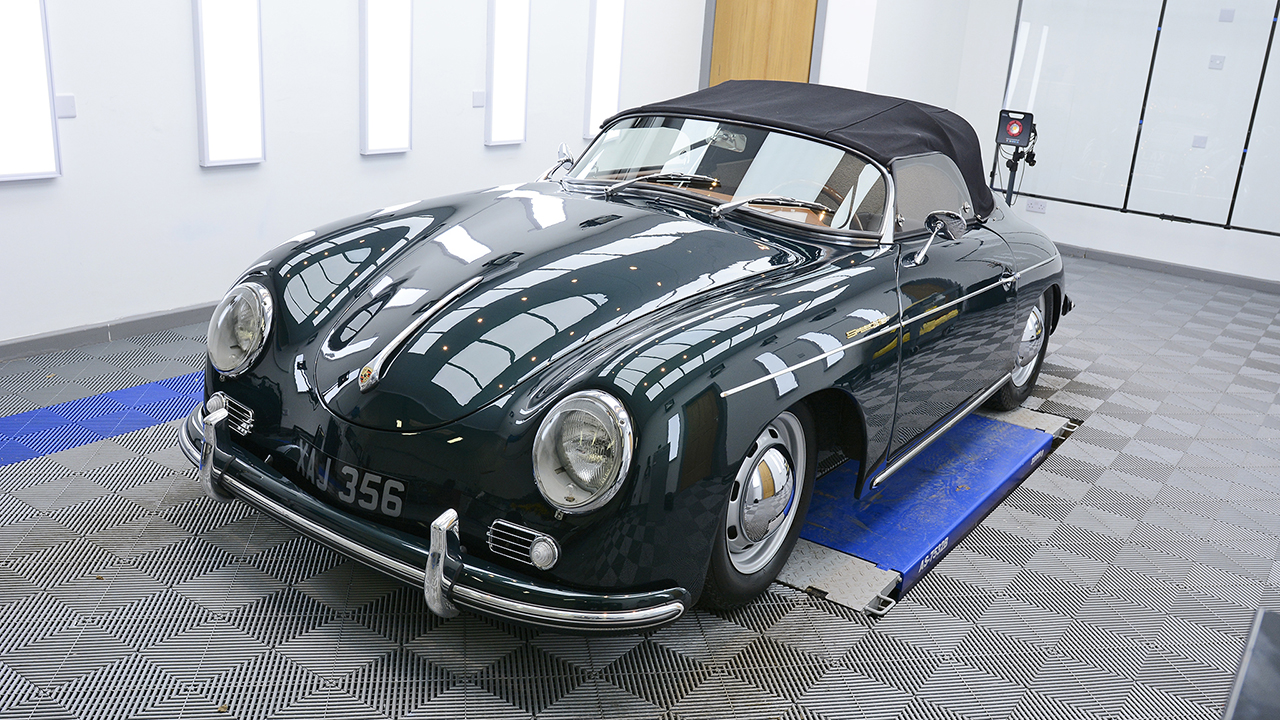
Porsche 356 Speedster – two-stage machine polish and ceramic coating
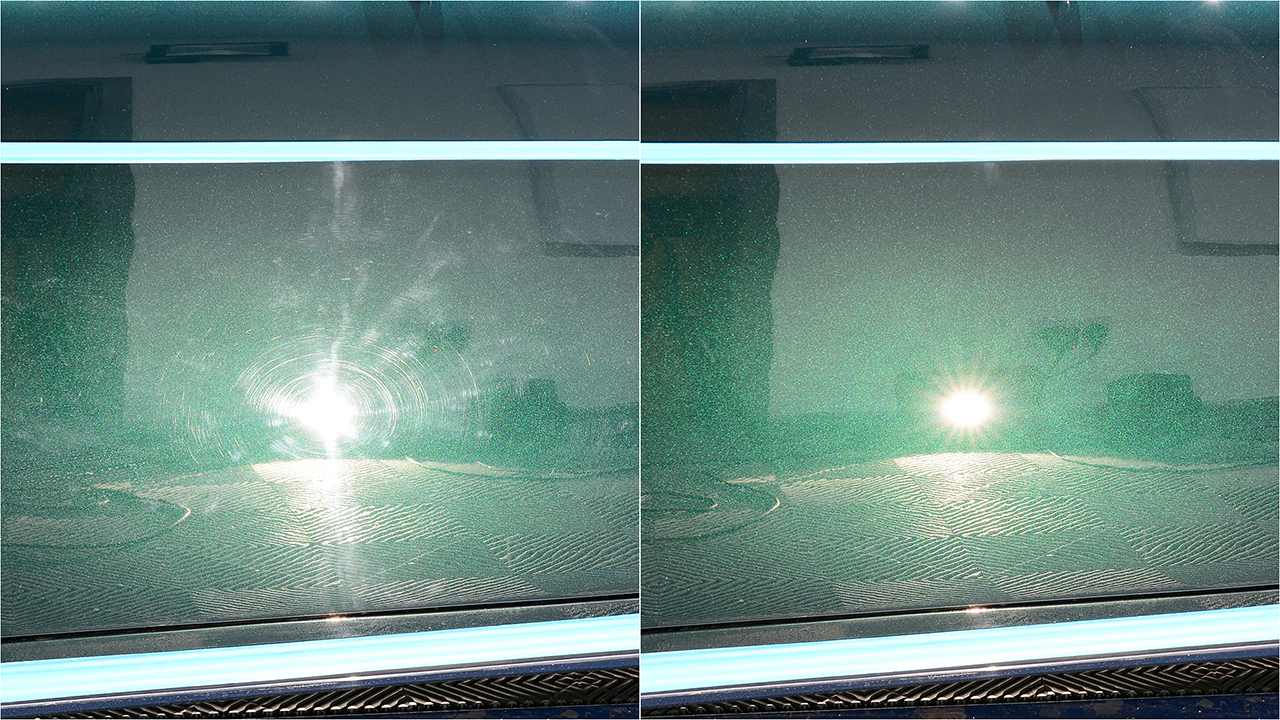
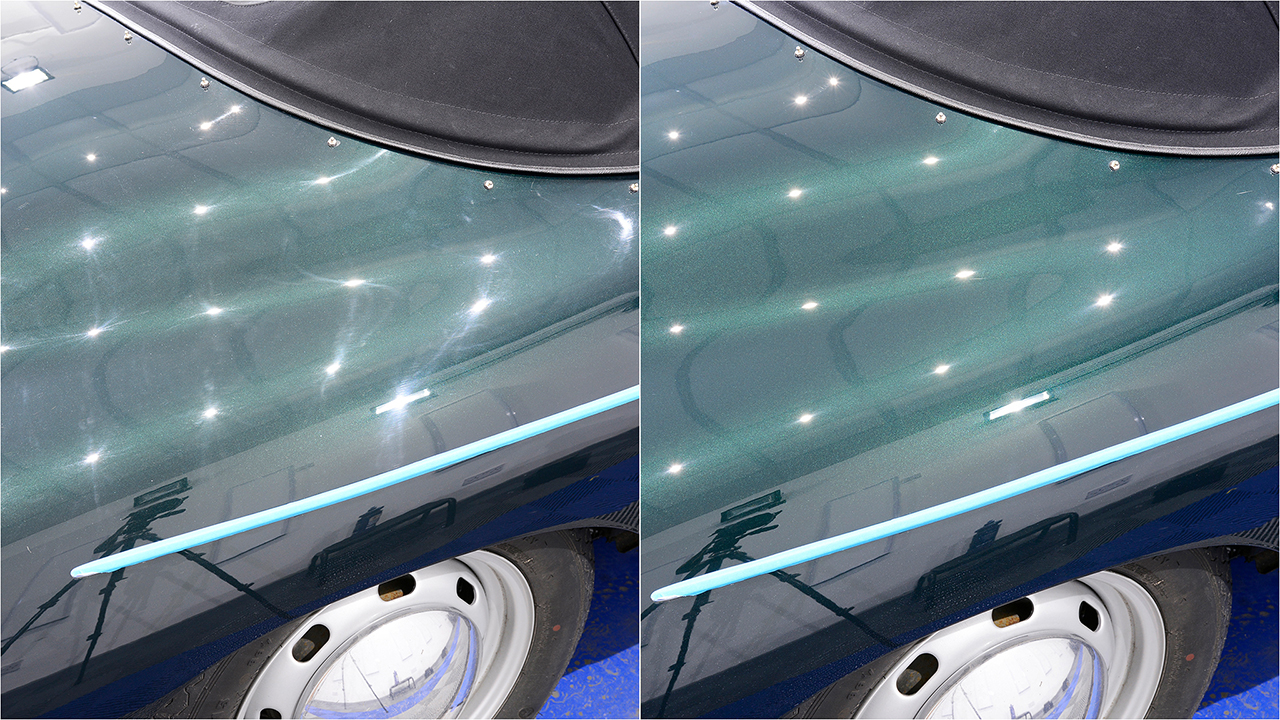
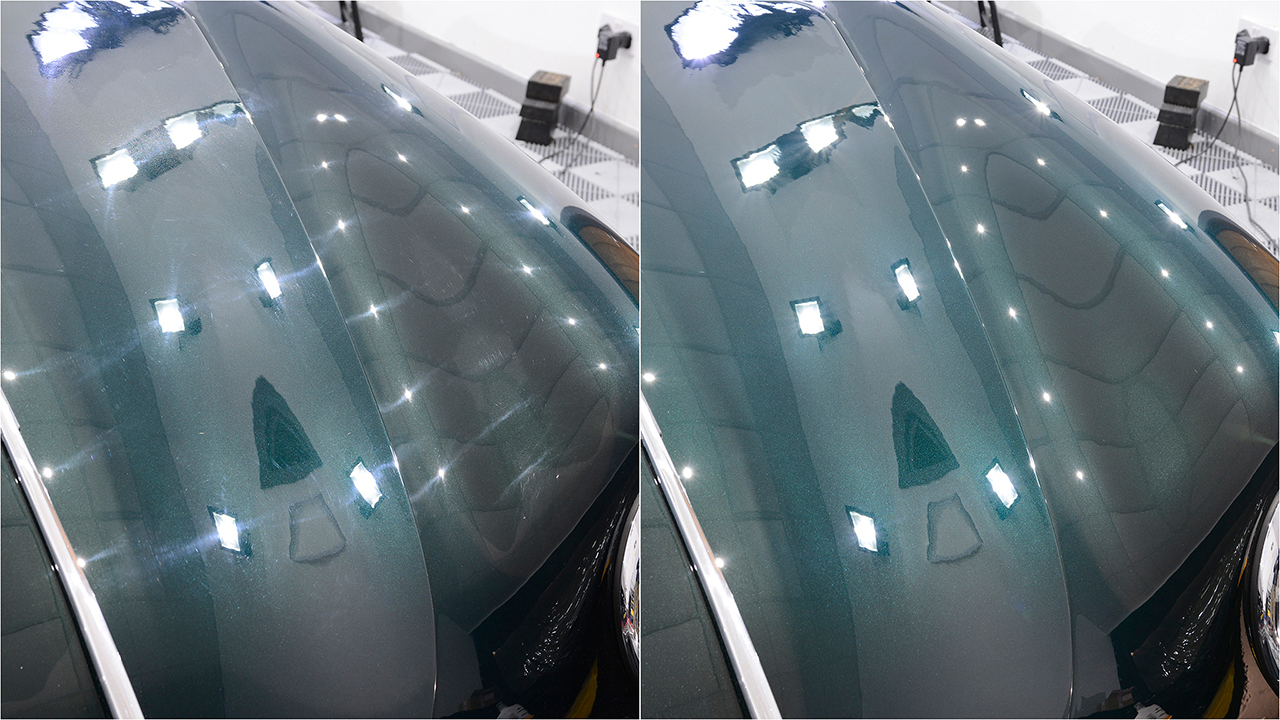
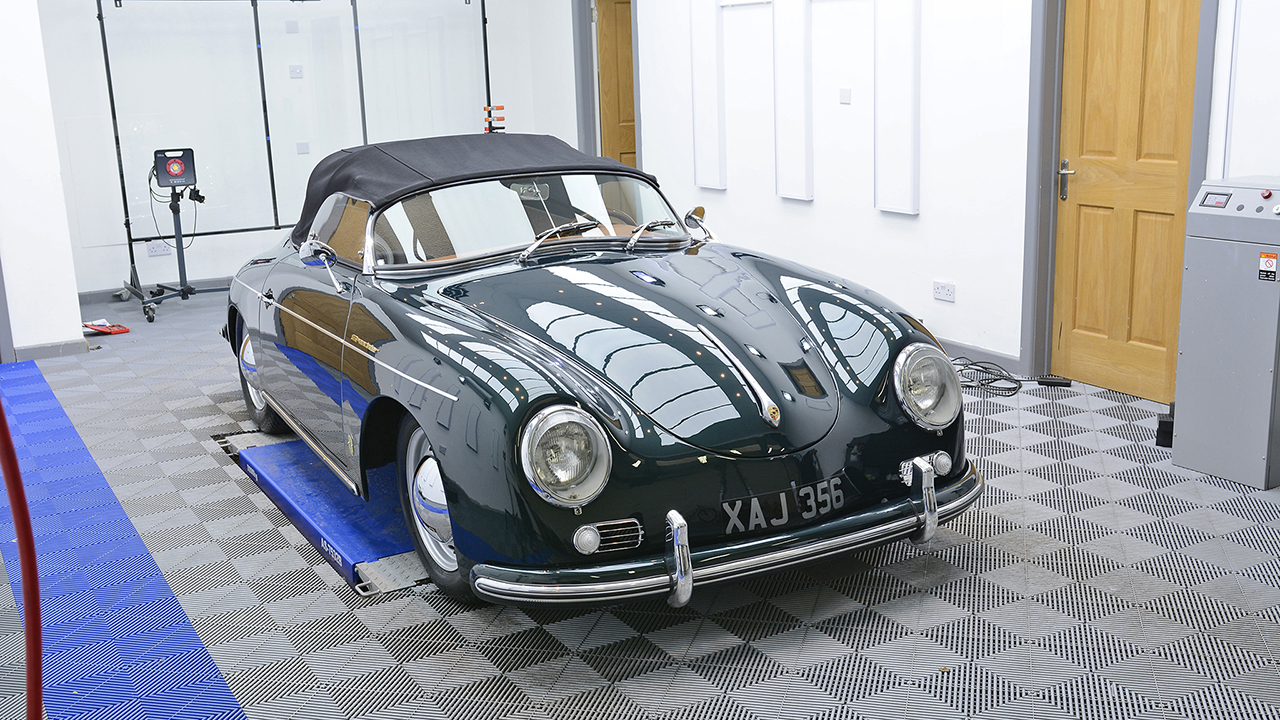
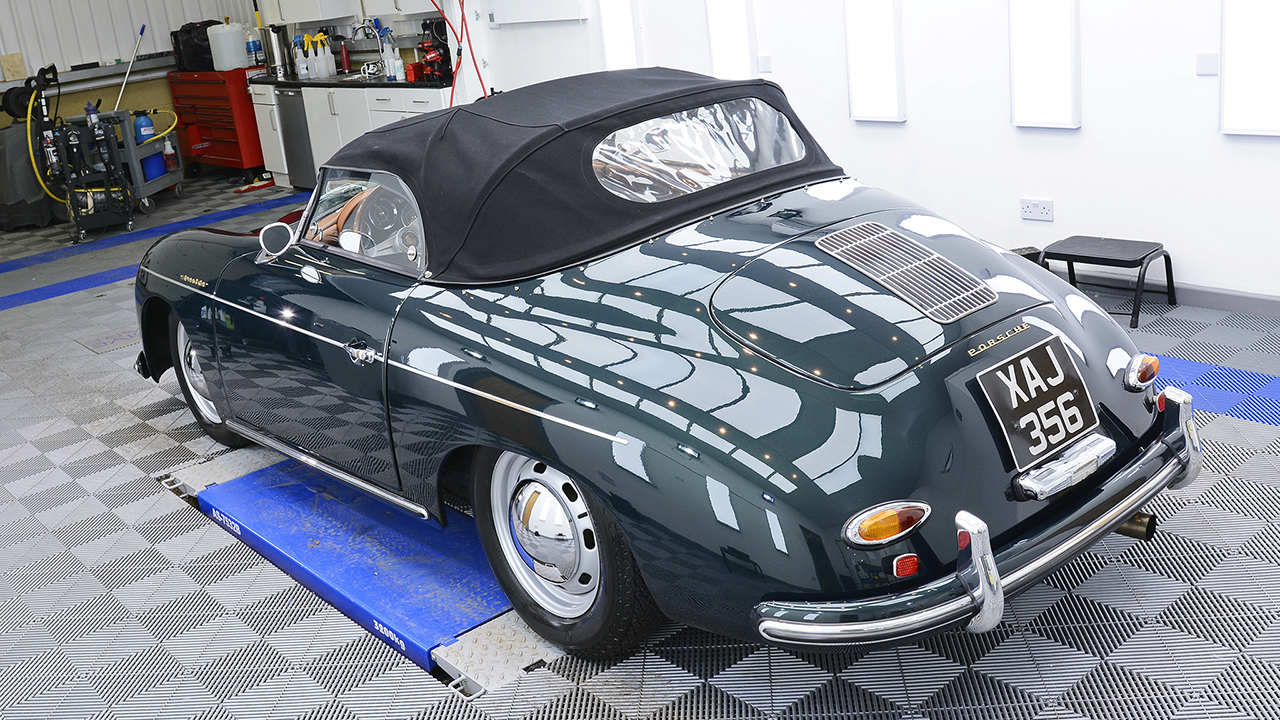
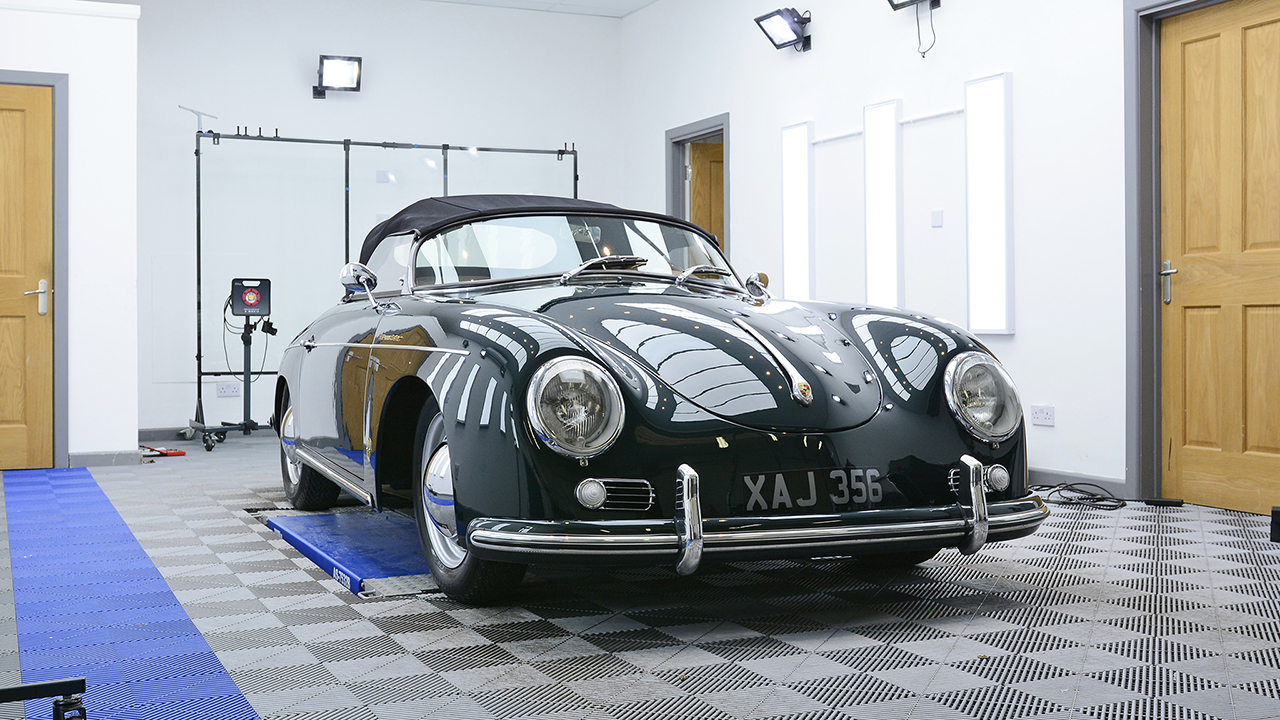
This dark green Porsche 356 Speedster came into our Hilperton studio for a two-stage machine polish — our Level 2 minor correction — followed by a ceramic coating to protect the result. The 50/50 shots in the gallery were taken under LED lighting, which is the only place this kind of damage shows honestly.
Level 2 minor correction, two stages
A two-stage machine polish means a cutting stage to remove the defects and a refining stage to bring the gloss back up behind it. At Level 2 the aim is a minor correction — taking out the bulk of the swirls and wash marks and lifting the finish substantially, rather than chasing the last few deep scratches and removing more paint than the car can spare.
Why a classic gets a lighter hand
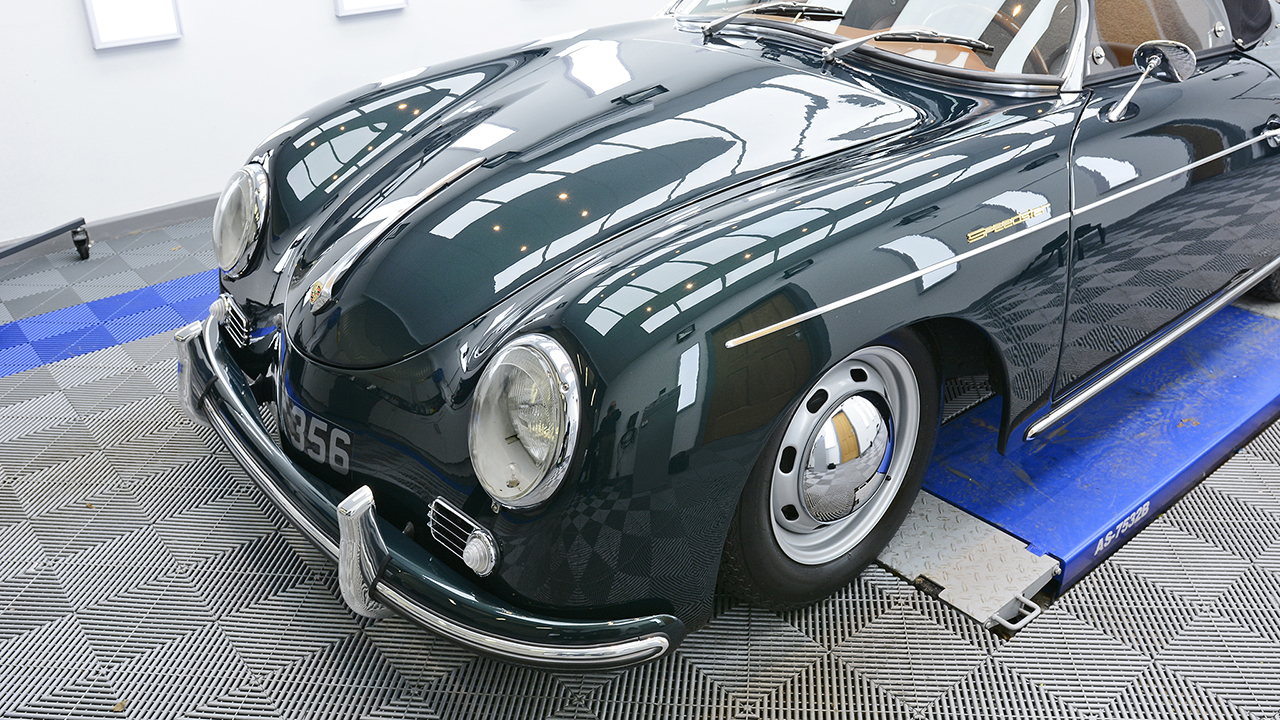
A 356 has none of the thick, hard clear coat a modern car arrives with, so there is far less material to work with and far less room for error. That is exactly why Level 2 was the right call here. The tight areas — around the chrome trim and over-riders, along the beltline, into the panel edges and the curve over the front wings — were finished by hand rather than taken near with a machine.
What the before and after shots show
In each comparison the left half is the paint as it arrived: a web of fine scratches and buffer trails built up over years of washing, which under a single point of light spreads into that familiar haze. The right half is the same panel after correction, with the light source reading as a clean point rather than a starburst. In daylight the difference is depth — dark green either looks flat and tired or it looks wet, and there is very little in between.
Protected once the work was done
With the paint corrected, the car was finished with a ceramic coating. On a classic that gets driven rather than stored, that protection earns its keep twice over: the finish is guarded, and the car washes far more gently, which is what keeps the swirls from simply coming back.